BESS for Southeast Asian Factories: Specify Climate and Grid Conditions
BESS selection for a Southeast Asian factory should begin with the site’s climate, electricity connection and production pattern. Specify the hottest expected equipment conditions, humidity exposure, grid disturbances and required operating modes before comparing cabinet prices. A regional demand trend can explain interest in storage; it cannot choose the right cooling architecture or guarantee a factory’s savings.
The IEA ASEAN Energy Security Review, published on 6 October 2026, projects electricity demand growth of 5.4% annually across the region during 2026 to 2030. Industry and cooling are among its drivers. For an individual buyer, the relevant next step is a site-specific specification that converts operating conditions into equipment and acceptance requirements.
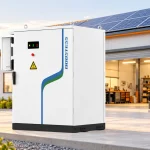
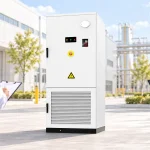
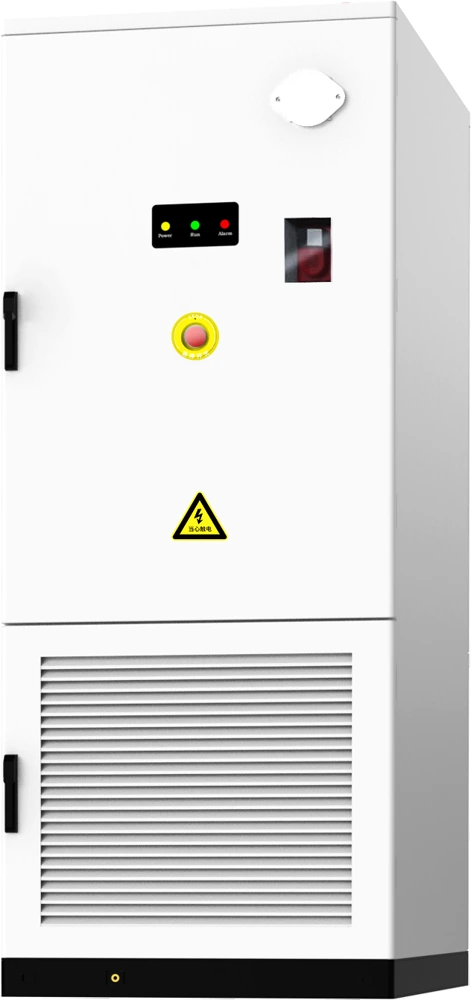
The 105kW/241kWh air-cooled cabinet and 125kW/261kWh liquid-cooled cabinet provide different documented configurations. Compare them against the same factory conditions rather than assuming that a cooling label alone establishes performance.
Key takeaways
- Specify continuous power at the site’s actual environmental conditions.
- Separate integrated AC systems from DC battery cabinets with external conversion equipment.
- Make cooling service, communications and recovery behavior part of acceptance.
On this page
- Use local operating conditions, not a regional average
- Distinguish an operating range from rated-power conditions
- Choose architecture before comparing cooling
- Review thermal operation and service together
- Keep enclosure scope explicit in humid or rainy conditions
- Translate production peaks into a constrained dispatch case
- Test grid-event and recovery behavior
- Ask for a comparable climate and grid evidence package
- Questions factory buyers often need to resolve
- Specify the conditions the factory will actually face
Use local operating conditions, not a regional average
Factories in the same country can have different climate and electrical conditions. A coastal site may face salt exposure; an inland site may experience dust or different temperature swings. A cabinet beside production equipment may operate in a warmer local environment than the weather station suggests.
Record ambient conditions at the proposed equipment location, including any heat rejected by nearby equipment. Add humidity, rain exposure, drainage and contamination conditions to the site information. Ask whether the product specification uses external ambient temperature, cooling intake temperature or another boundary. Those terms need to match the site assessment.
Treat existing grid behavior with similar precision. Gather the available outage history, voltage event records, utility connection limit and production schedule. A broad description such as “weak grid” does not identify whether the project needs tariff management, controlled backup, generator coordination or a power-quality function. Those are different operating objectives and should be stated separately.
Distinguish an operating range from rated-power conditions
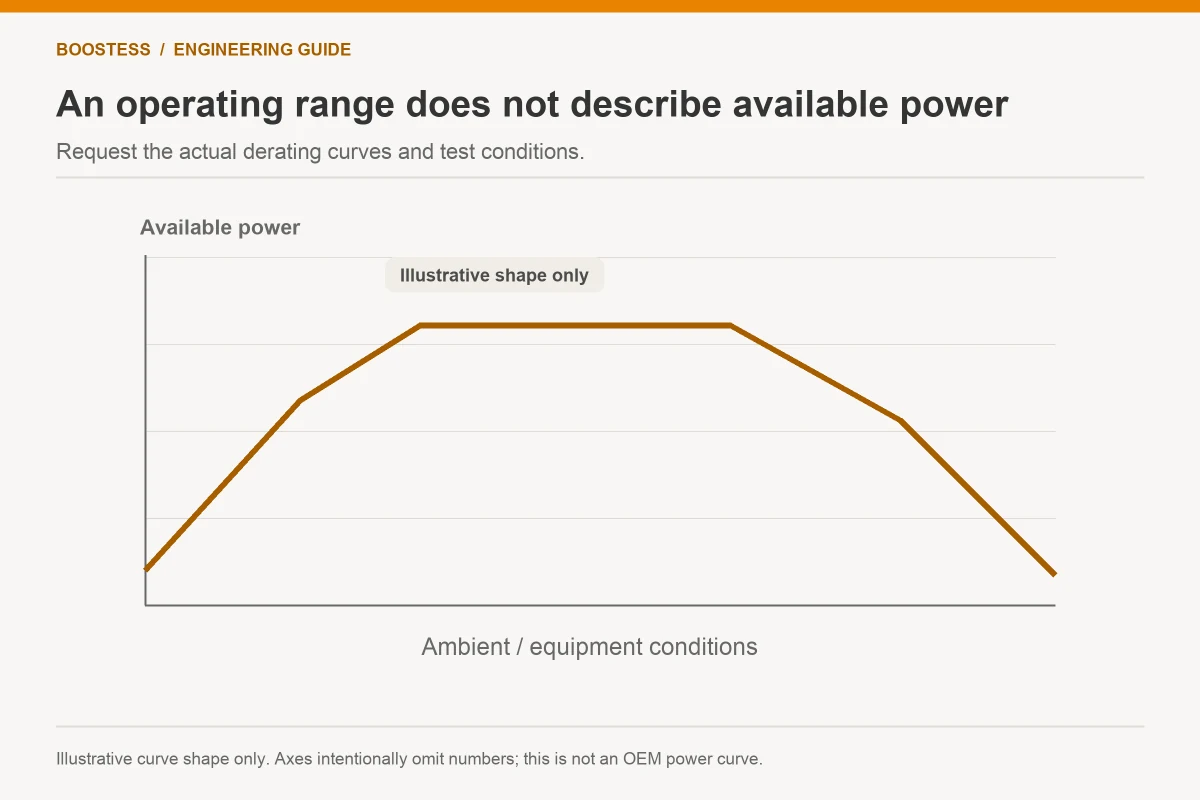
An allowed temperature range tells the buyer where equipment may operate. It does not establish full continuous power throughout that range. Review any derating note and request the applicable power curve or approved operating limit.
The supplied 261kWh liquid-cooled DC cabinet lists operation from -20°C to 55°C and derating above 45°C. Its table also specifies a 0.5P charge/discharge rate. These are manufacturer specification entries for that DC configuration, not proof of a constant 125kW AC output at 55°C. Its external PCS or hybrid inverter must be selected and reviewed separately.
The purchasing decision should therefore ask what continuous site output is available at the agreed hottest design condition. If the supplier’s quoted power depends on a cooler condition, the project model must reflect that. Do not create a derating curve from the two temperature endpoints. Obtain the actual curve or written design confirmation for the exact equipment arrangement.
Choose architecture before comparing cooling
A battery cabinet can contain storage and controls while relying on separate AC conversion equipment. An integrated AC cabinet includes a different set of components. A split hybrid system adds still another arrangement for PV or diesel integration.
The supplied 125kW/261kWh integrated liquid-cooled system and 261kWh liquid-cooled DC cabinet illustrate why that distinction matters. The shared energy label does not make their output, dimensions, auxiliaries or communications scope interchangeable. Ask for a boundary drawing showing batteries, PCS, EMS, auxiliary distribution and cooling equipment.
Use the drawing when comparing offers. One price may include conversion equipment and another may cover a battery cabinet only. The installed scope should also identify cables, foundation work, protection, monitoring and commissioning responsibility. A lower cabinet price cannot be assessed fairly until the missing interfaces and installation tasks are priced on the same basis.
Review thermal operation and service together
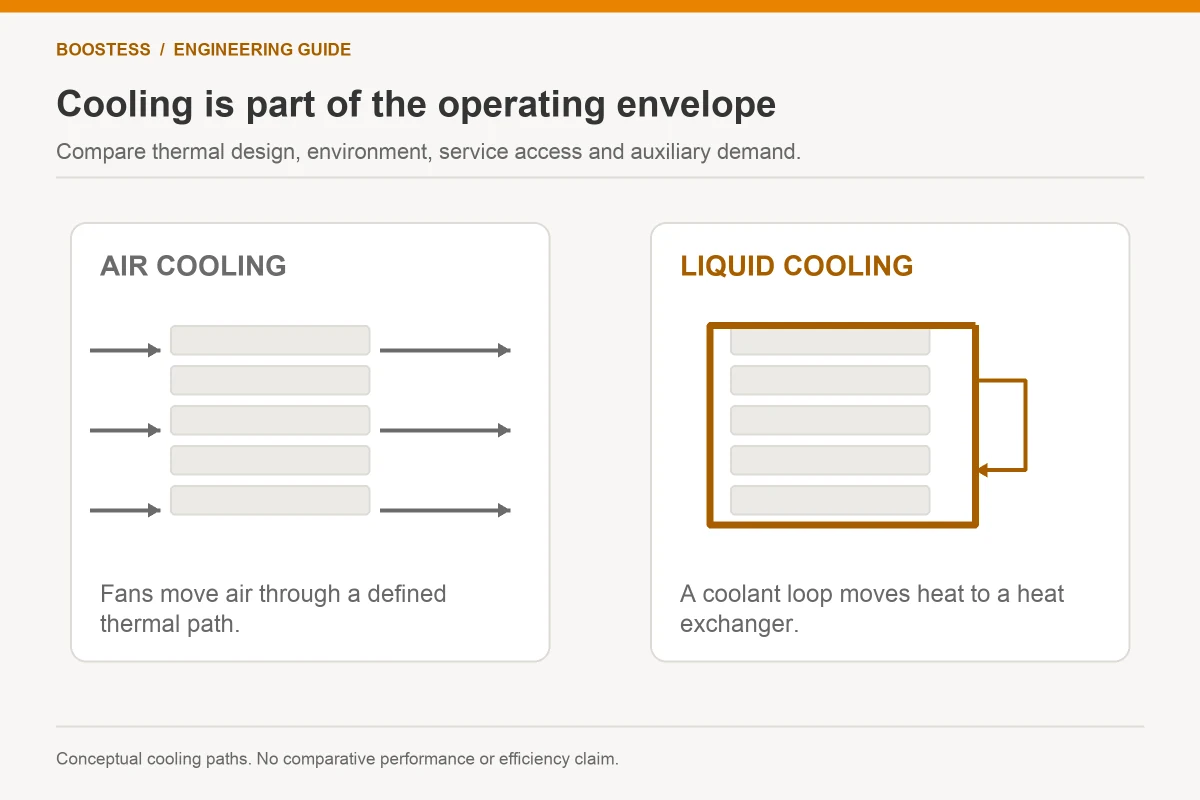
Cooling selection should account for temperature control, auxiliary demand and maintainability. Ask how the offered system handles the proposed duty profile at the site’s design conditions. Record which cooling components need inspection, access or replacement and who can provide that service locally.
The NREL, Sandia and SunSpec O&M guidance discusses battery temperature monitoring in maintenance and performance assessment. For this project, convert that principle into measurable records: ambient condition, battery temperatures, cooling status and the electrical boundary used to measure auxiliaries.
For liquid-cooled equipment, request the model-specific coolant information and approved maintenance procedure. For air-cooled equipment, review airflow and heat rejection in the actual layout. Neither architecture should be described as maintenance-free. The owner needs a practical route to service the system without blocking factory access or leaving critical loads unsupported during planned work.
Keep enclosure scope explicit in humid or rainy conditions
Water exposure should be assessed at the complete installation level. The supplied liquid-cooled DC cabinet lists IP54 for the cabinet and IP67 for its packs. These ratings apply to different boundaries. They do not establish that the full system can be submerged or that external conversion equipment has the same protection.
Review cable entries, outdoor junctions and auxiliary enclosures with the installer. Identify which sealing work is completed in the factory and which is completed on site. If equipment is mounted beneath a roof or near a wall, check runoff and service access as well as direct rain exposure.
Humidity also deserves an equipment-specific question. Ask for the permitted conditions and any condensation restrictions in the installation instructions. Do not use a humidity percentage from one brochure to approve a different assembly. Keep environmental requirements for the battery, PCS and controls together so that the weakest unreviewed part does not become an overlooked project condition.
Translate production peaks into a constrained dispatch case
Use the factory’s load record to define required battery power and energy. Include recurring peaks, longer production periods and the opportunity to recharge. The system should be assessed at the same environmental conditions used in the equipment selection.
Consider a hypothetical factory asking for 60kW of support for three hours. That requires 180kWh of delivered energy before additional project allowances. The 105kW/241kWh cabinet’s nominal energy exceeds 180kWh, but that comparison alone does not confirm delivery. Allowed SOC window, reserve, losses, auxiliaries and any environmental restrictions still have to be evaluated.
The example shows why buyers need two checks. The required support power must fit the approved output limit, and the energy requirement must fit the usable delivery under the agreed conditions. Then verify the charging window. If the factory also needs evening backup reserve, the daily dispatch case must protect that reserve rather than spend the same energy twice.
Test grid-event and recovery behavior
A grid disturbance can change the operating requirement immediately. Define which loads stay connected, which can be shed and whether a generator participates. Obtain documented transfer and recovery behavior for the exact configuration rather than assuming that every BESS behaves like a UPS.
The DOE microgrid project checklist covers the planning and implementation of commercial microgrids. For a factory project, use a specific functional matrix: normal grid operation, grid loss, source unavailability, communications failure and return to grid. Qualified personnel should design the tests and conduct them under the approved procedures.
Recovery includes recharging and restoring routine dispatch. A system that supports essential loads through an event may return with insufficient reserve for the next shift. The owner needs to know how the controller prioritizes recharge, site import limits and production peaks afterward. That behavior belongs in the agreed sequence of operations.
The supplied DC cabinet lists Ethernet and Modbus TCP/RTU interfaces. Those names support an integration question, not an assumption about control authority. Request the signal map, units, update behavior and response when a limit changes. The factory controller must interpret battery availability and converter capability consistently, including under high-temperature restrictions.
Ask for a comparable climate and grid evidence package
Use the same request for every candidate configuration. The table below is a proposed buyer’s evidence format, not a regional certification checklist.
| Site requirement | Supplier evidence | Acceptance question |
|---|---|---|
| Hot-condition operation | Continuous-power conditions and derating data | Can the chosen arrangement meet the required output? |
| Humidity and rain exposure | Model-specific environmental instructions | Does the complete installation match the stated conditions? |
| Repeated production peaks | Approved dispatch and usable-energy case | Is recharge possible without creating another constraint? |
| Grid interruptions | Operating-mode and load-priority documents | Which agreed loads remain supplied? |
| Service continuity | Maintenance scope and local support arrangement | What happens while equipment is unavailable? |
Name the model and document revision in every response. A generic brochure may introduce a product family, but the acceptance package needs the ordered configuration. Keep open questions visible until the responsible engineer closes them.
Questions factory buyers often need to resolve
Is liquid cooling always the right choice for hot sites?
The decision depends on required duty, environmental conditions, cooling design and service capability. Compare documented continuous-power performance and maintenance requirements rather than select by the label alone.
Does a 261kWh cabinet necessarily deliver 125kW AC?
No. The integrated AC system and DC battery cabinet are different architectures. A DC cabinet’s AC output depends on the chosen compatible PCS or hybrid inverter and the approved system design.
Can one regional business case be reused across several factories?
Use it only as a screening concept. Each site needs its own tariff, load data, connection conditions and environmental inputs. Even similar factories can have different reserve needs and charging opportunities.
Specify the conditions the factory will actually face
A useful purchase specification connects the real site with the exact equipment configuration. It records environmental limits, usable energy, source interfaces, service arrangements and tests for disturbed operation. These decisions are more useful than a general claim that regional storage demand is growing.
Review the system integration scope and send BOOSTESS the load record, site conditions and required backup modes through a technical inquiry. Ask for a model-specific response that shows how those conditions affect the proposed factory storage system.