Cold Storage BESS: Plan Around Refrigeration and Defrost Loads
Battery storage for cold storage facilities should be designed around refrigeration events, operating constraints and electrical measurements. A monthly electricity total cannot show whether demand peaks come from compressors, electric defrost, loading operations or several events occurring together. Those differences determine whether scheduling, battery discharge or a combination can address the problem.
The first design decision belongs jointly to refrigeration operations and the electrical team. A proposed dispatch schedule must preserve the facility’s approved temperature limits and product handling requirements. Treat refrigeration control as a process constraint, with its own responsible specialist. This article develops a hypothetical load worksheet and explains what evidence a project owner should request before choosing a cabinet.
Key Takeaways
- Measure compressors, defrost and handling equipment separately before assigning a battery duty.
- Check power during overlapping events and energy across repeated events.
- Keep refrigeration permissions, backup requirements and battery acceptance criteria separate.
On this page
Identify the event behind the peak
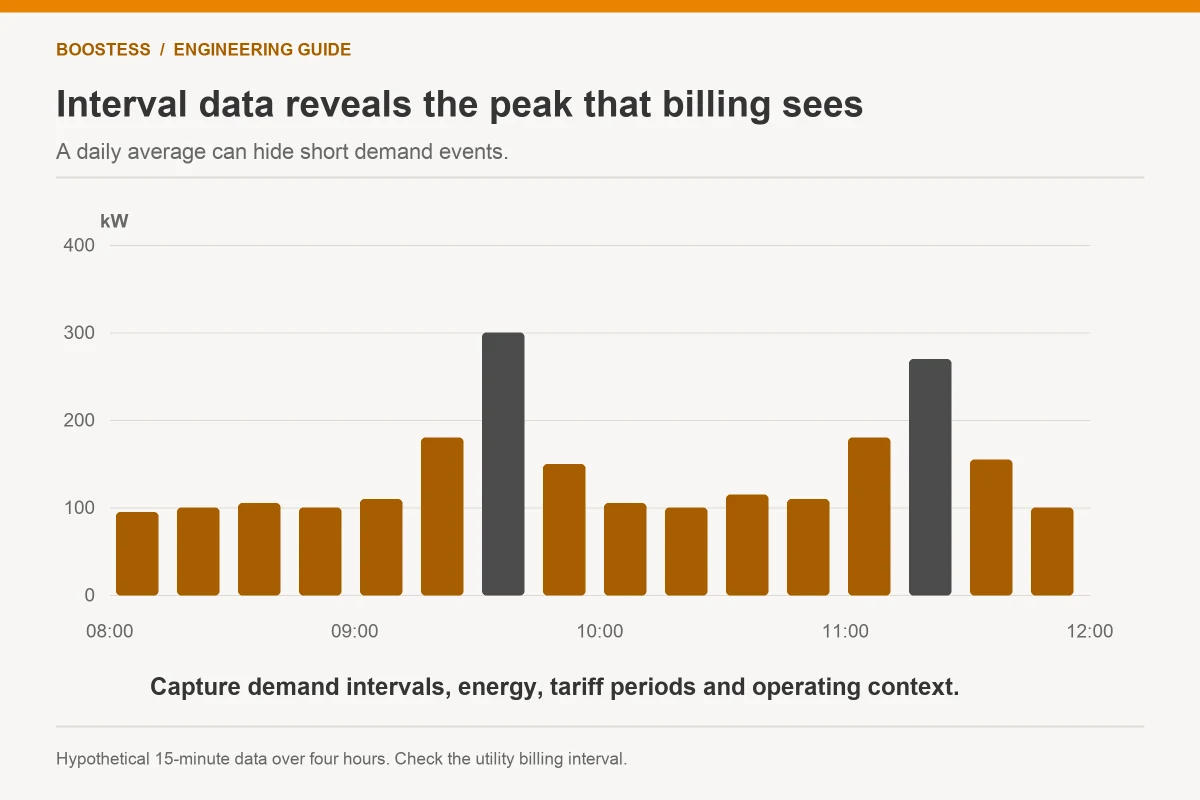
Build an event log that operations staff can explain. For each high-demand period, record compressor stages, defrost circuits, door activity, dock equipment and unusual production conditions. Align that record with the connection meter. A peak associated with loading a warm product batch may have a different duration from an electric defrost cycle.
Start with representative busy days, then cover different seasons and working patterns. Ambient conditions and incoming product can change refrigeration duty. A quiet overnight period should not stand in for an afternoon receiving shift. Record shutdowns and maintenance too, because an abnormal operating week can distort an average profile.
Look at individual phases as well as total power. A site can meet a three-phase total-power target and still have an unacceptable phase loading condition. The electrical designer needs those measurements when reviewing the connection, distribution system and selected storage equipment.
Define the project objective in terms of the actual tariff and connection requirements. Bill reduction, backup continuity and a connection ceiling are separate objectives. The site’s demand-charge reduction explanation provides the wider billing context; a cold store still needs event-level analysis to decide which duty the battery should perform.
Compare process scheduling with battery discharge
Some electrical overlap may be avoidable through an approved refrigeration schedule. The refrigeration specialist should decide whether defrost events can move, whether compressor staging can change and which temperature conditions govern those choices. A battery consultant should not invent an acceptable temperature excursion to make the financial model work.
Keep the alternatives visible in the feasibility study. One option can retain current operations and add storage. Another can use permitted process changes with smaller battery support. A third may rely on load sequencing alone. Each option needs a record of operational constraints and the effect on staff, product handling and maintenance.
NLR REopt supports site energy-system optimisation. For this application, the project team must supply the refrigeration constraints and realistic load profiles that make an optimisation result useful. A model that assumes every defrost cycle can move freely answers a different question from the one the facility actually faces.
Changes should also be reversible and understandable. If the refrigeration operator overrides a schedule, the battery controller needs to accommodate the resulting power. Define the priority of process protection over an economic dispatch request. A control plan that depends on operators never using their authorised override is fragile.
A hypothetical defrost overlap worksheet
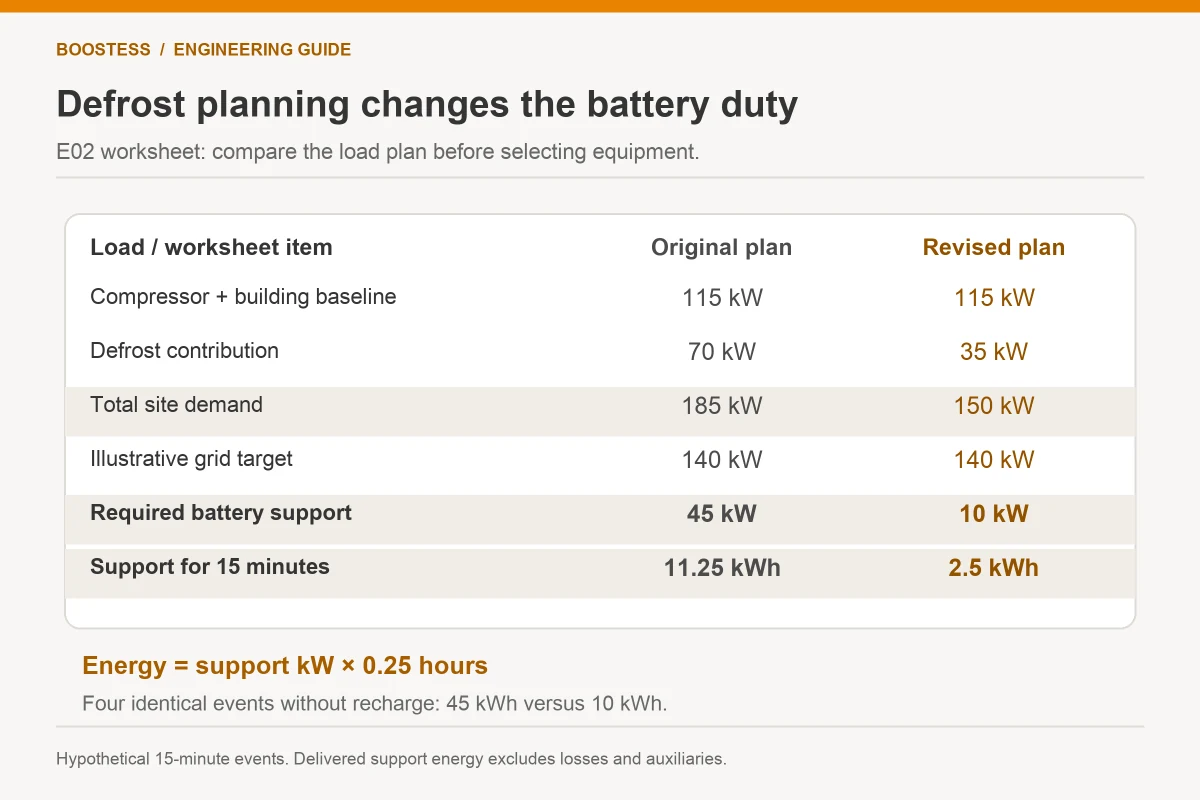
Consider a facility with the following assumed loads during a fifteen-minute event. Compressor demand is 90 kW, handling and building demand is 25 kW, and electric defrost adds 70 kW. The total is 185 kW. Suppose the owner wants to evaluate a 140 kW connection-power target during that event.
| Assumed condition | Total site load | Battery support to reach 140 kW | Delivered energy for 15 minutes |
|---|---|---|---|
| Compressors and handling only | 115 kW | 0 kW | 0 kWh |
| All defrost circuits overlap | 185 kW | 45 kW | 11.25 kWh |
| Defrost is reduced to 35 kW through an approved sequence | 150 kW | 10 kW | 2.5 kWh |
The worksheet illustrates why a large short peak may require moderate energy. It does not establish a real cold store’s savings or prove that a particular defrost sequence is permitted. The target is hypothetical too; its relationship to billed demand must be checked against the actual meter interval and tariff.
Now assume four identical overlap events occur before the battery can recharge. The first dispatch option uses 45 kWh of delivered energy across the four events. The approved-sequencing option uses 10 kWh. Those totals exclude conversion losses and auxiliary consumption. The starting state, recharge opportunities and reserve allocation can change the usable margin.
The result also depends on the shape of the compressor load. If compressor demand rises during recovery after defrost, the battery may need to discharge longer than fifteen minutes. Extend the event boundary until the measured load returns to normal. Stopping the calculation at the end of the defrost timer can omit a material part of the duty.
Match cabinet ratings to the complete duty
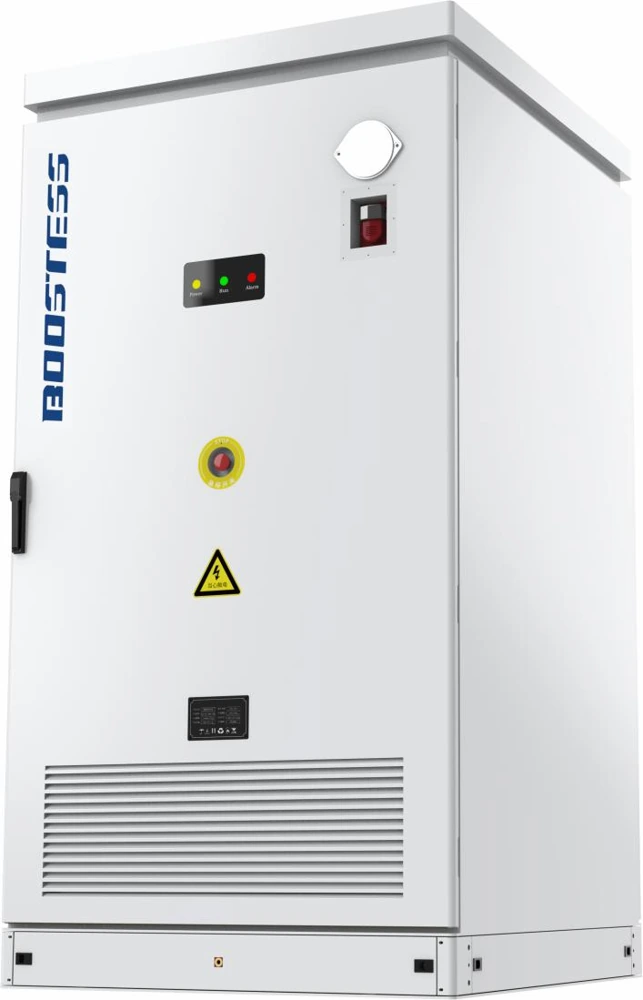
The BOOSTESS product brochures describe a 105 kW / 241 kWh air-cooled cabinet and a 125 kW / 261 kWh liquid-cooled cabinet. These provide two documented rated configurations to compare against a refrigeration profile. The hypothetical 45 kW event is below either nominal power rating, but that alone does not select a system.
Ask for available AC energy over the agreed operating state and temperature, and for available power under the site’s conditions. Nominal energy includes capacity that may be outside the dispatch window or allocated to backup reserve. A refrigeration project may have long standby periods, so include cabinet auxiliaries in the energy model rather than considering discharge events alone.
Review recharge against the next process peak. If charging begins immediately after defrost, it may create another connection peak while compressors recover. The EMS needs a charging ceiling or predictive rule that accounts for the facility load. The procurement document should state whether this rule operates locally and which meter supplies its measurement.
Location is another practical input. Outdoor cabinet ratings do not establish a suitable installation position near loading docks, washdown areas or traffic routes. Obtain the approved site layout, clearance requirements, environmental assessment and service access plan for the offered variant. This is part of equipment selection, even when it does not change the nominal kWh figure.
A receiving-area expansion can alter both peak magnitude and recovery time. Add its compressors, dock activity and permitted defrost schedule to the event model before retaining the original cabinet duty. The documented 105 kW and 125 kW output ratings remain equipment limits even when the facility grows; existing battery energy does not grant additional instantaneous power. Record which part of the revised duty needs fresh engineering confirmation.
Define backup around the refrigeration process
For outage planning, list the loads that preserve the facility’s chosen operating state. That may include refrigeration controls, selected compressors, condenser equipment, communications and necessary pumps. The owner and refrigeration specialist should distinguish immediate continuity requirements from loads that can restart later.
The building resilience guidance from NREL discusses prioritised critical loads. Apply that concept by defining explicit refrigeration priorities, not by declaring every circuit critical. Electrical backup duration and product temperature holdover are different quantities. The latter needs a process assessment that accounts for the building, stock, doors and ambient conditions.
An assumed 80 kW backup load running for two hours requires 160 kWh at the supported AC bus before any added allowances. That calculation is a requirement, not a claim that a 241 kWh nominal cabinet will meet it. Verify deliverable energy, transfer performance, starting loads and operating mode. Confirm how the refrigeration controllers recover after a disturbance.
Automatic restart deserves its own review. Several compressors starting together can demand more power than a steady-state load list suggests. The project team should use manufacturer information and approved test methods to establish the restart sequence. Do not rely on a general storage-versus-generator comparison for this application-specific result.
Commission against events operators recognise
Choose acceptance scenarios from the event log: a normal receiving shift, an approved defrost overlap, compressor recovery, low battery energy and a loss of the dispatch measurement. The refrigeration team should observe the process response while the electrical team verifies power and protection behaviour.
Record connection power, battery AC energy, state of charge, commands, alarms and the relevant process signals on a common time base. Define whether the target applies to instantaneous power, averaged demand or both. State any allowed excursion and its source in the connection agreement. An unspecified “peak reduction” is difficult to verify.
Agree the process stop conditions before testing. If a refrigeration limit approaches its approved boundary, authorised operations staff need a clear route to suspend the economic test. The battery should then move to the agreed safe operating state. This protects the process and produces a useful record of the design’s limitations.
The handover should include the operating schedule, control priorities, allowed operator changes and a method for reviewing new product lines or shifts. Demand patterns change when a cold store expands, even if the electrical service remains the same. Revisit the load worksheet after such changes instead of assuming the original dispatch plan still fits.
Buyer questions
Can storage eliminate defrost demand peaks?
Storage can supply part of the electrical load when power and available energy are sufficient. It does not change the underlying refrigeration duty. Approved sequencing may reduce the battery requirement, and the billing effect depends on the actual tariff.
Does battery capacity prove refrigeration backup duration?
No. The project needs a supported-load profile, usable AC energy boundary, starting and transfer requirements, and an agreed starting reserve. Product temperature holdover also requires a separate refrigeration assessment.
What should be included in the request for quotation?
Provide interval load data, event logs, the connection objective, process constraints, backup priorities, environmental conditions and acceptance scenarios. Ask bidders to state assumptions and exclusions beside their proposed performance. That allows the owner to compare usable solutions rather than unrelated cabinet ratings.