Solar and Battery Storage for Irrigation: Design for the Season
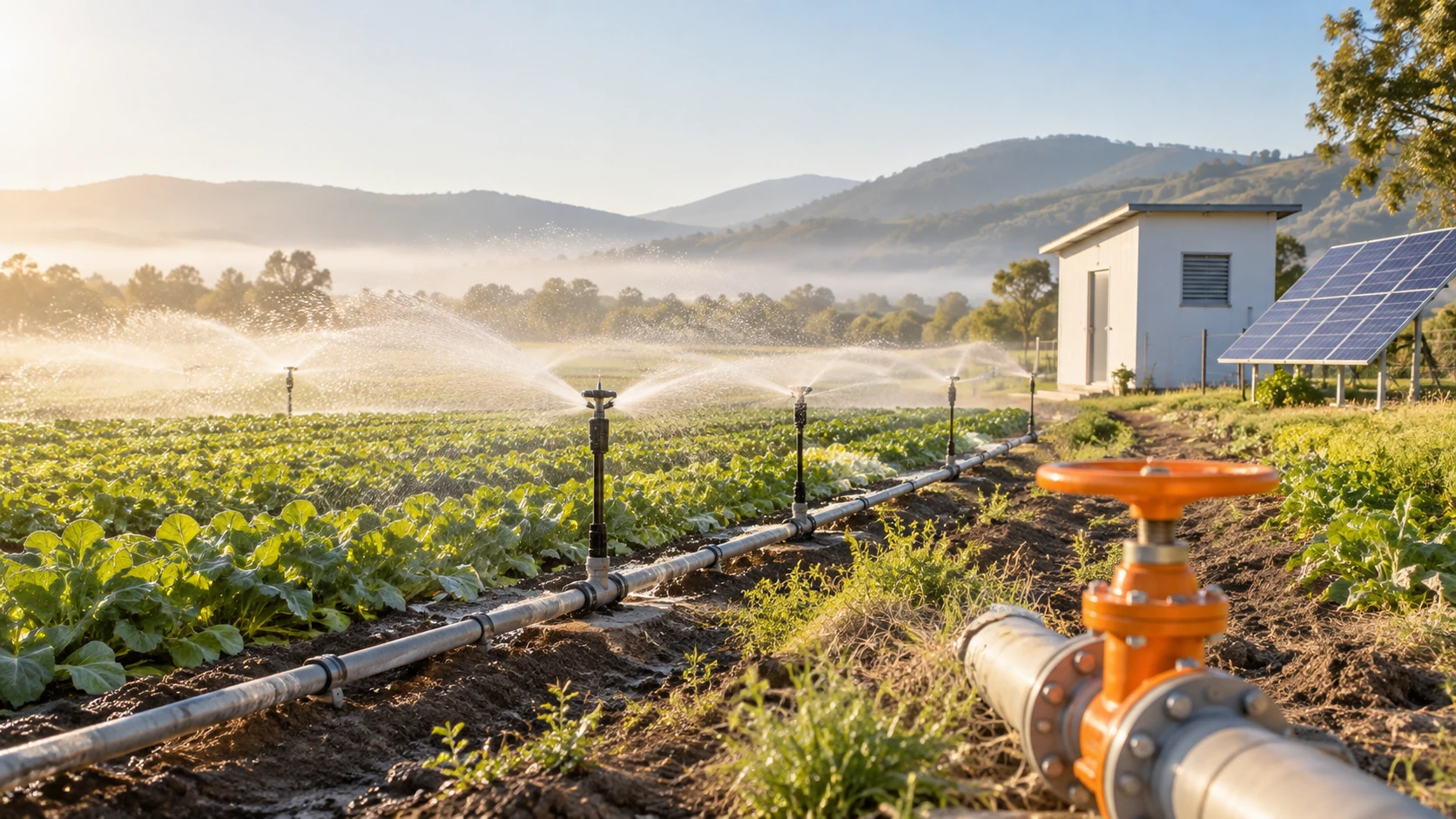
Solar battery storage for irrigation should follow the pumping season and the available watering window. Annual electricity consumption is useful for financial planning, but it can conceal the daily power and energy requirements that determine whether a system can operate the pumps. A farm that irrigates intensively for a few months needs a different assessment from a facility with a steady year-round load.
The assessment starts with the irrigation requirement, not the size of the solar array. Establish when water must move, how much pumping is required, which pumps can run together and what interruptions the operation can tolerate. This guide uses a hypothetical seasonal workload to explain how an owner and EPC can turn those inputs into a practical procurement brief.
Key Takeaways
- Calculate pumping-day energy separately from annual energy.
- Verify motor starting and restart sequences independently of steady pump power.
- Compare battery storage with approved pumping schedules and available water storage.
On this page
- Use the busiest irrigation period as a design input
- Why annual averages can mislead
- Review the watering schedule before choosing storage
- Steady pump power does not prove starting capability
- Keep battery and integration choices separate
- Test the operating season, then test the exceptions
- Questions for the owner and EPC
Use the busiest irrigation period as a design input
Collect operating information for the periods when irrigation matters most. Identify crop requirements, water availability, allowed pumping hours, pump duty and other loads on the connection. The agronomist or irrigation specialist should define the operational boundaries. An energy model cannot decide how long watering can be delayed without those inputs.
Keep seasonal variation visible. A pump may run for four hours on a normal day and eight hours during a dry period. A system designed around the four-hour average could be inadequate precisely when the farm needs it. Record both conditions, plus the number of consecutive demanding days that the owner wants the project to support.
Measure electrical demand at the pump installation, including controls and auxiliaries. Nameplate motor output does not automatically equal input power at the connection. Variable-speed drives, motor efficiency, pressure, flow and duty point affect the measured profile. The electrical designer should obtain operating measurements and equipment information rather than assuming the motor label gives the complete load.
The DOE microgrid project-development checklist provides a planning reference for projects that combine sources and loads. For irrigation, the project brief must add seasonal water requirements and the consequence of an interrupted pumping day. That is what makes the design application-specific.
Why annual averages can mislead
Consider a hypothetical farm with a measured 30 kW pumping load that runs eight hours a day for ninety irrigation days. Pumping energy is 240 kWh per operating day and 21,600 kWh over that season. If the farm divides the seasonal total by 365 days, the result is about 59 kWh per calendar day.
The annual-average figure is less than one quarter of the actual pumping-day requirement. It could make a small battery appear sufficient on paper while concealing the daily irrigation duty. Use the seasonal total for annual accounts and the 240 kWh operating-day requirement for dispatch analysis. Neither figure should replace the other.
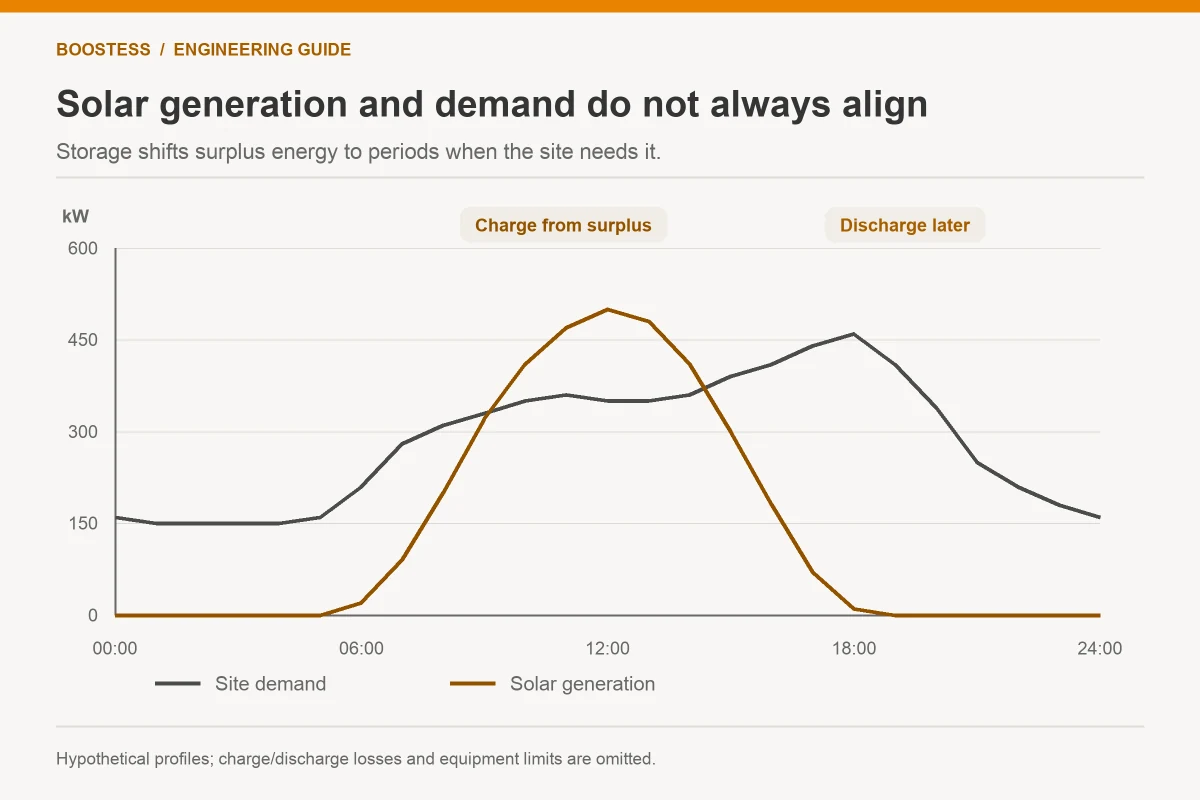
Now suppose four of the pumping hours can coincide with usable solar generation and four occur after sunset. The assumed nighttime pumping requirement is 120 kWh at the pump bus. That is a simple energy requirement before battery losses, reserve and other loads. It does not imply that a 120 kWh nominal battery would supply it.
The daytime supply also needs an hourly assessment. An array’s annual yield cannot establish its output during the particular pumping hours. Compare measured or modelled solar generation with the pump schedule through the chosen season, including cloudy sequences. NLR REopt is an available site-energy optimisation framework, but its results depend on the load and resource inputs supplied.
Review the watering schedule before choosing storage
A permitted shift in pumping time can change the electrical requirement substantially. If the irrigation specialist allows more pumping during the solar window, the farm may reduce the amount of energy that must pass through the battery. The change should be evaluated against water delivery requirements, labour availability and existing infrastructure.
Water storage can also alter the energy problem where an approved reservoir or tank allows pumping at one time and irrigation at another. Assess that option with the responsible water and process specialists. It has different site, maintenance and operational constraints from electrical storage. Do not assume a farm can build or use water storage merely because the energy model favours it.
Compare complete options: current timing with battery support, revised timing with a smaller battery, and a hybrid approach retaining a reserve for weather or equipment outages. State which irrigation requirements each option satisfies. A comparison based only on equipment cost ignores the reason the farm is buying reliable pumping capacity.
The internal solar-plus-storage integration discussion explains the broader source interfaces. In an irrigation project, attach the seasonal schedule and the authorised process changes to those electrical drawings. This prevents a design assumption from becoming an informal instruction to farm operators.
Steady pump power does not prove starting capability
Starting a motor is a separate electrical event. Obtain the starting method, manufacturer data, expected start duration and permissible voltage disturbance. Review the intended inverter’s current and overload behaviour in the actual operating mode. A 50 kW continuous rating does not itself prove that the equipment can start an arbitrary 30 kW pump.
Examine restarts as well as normal starts. Following an interruption, several pumps or drives may attempt to recover together. An approved restart sequence can reduce simultaneous demand, but the pump and irrigation designers need to verify the sequence against their requirements. The storage supplier should state which conditions have been demonstrated and which remain a site integration responsibility.
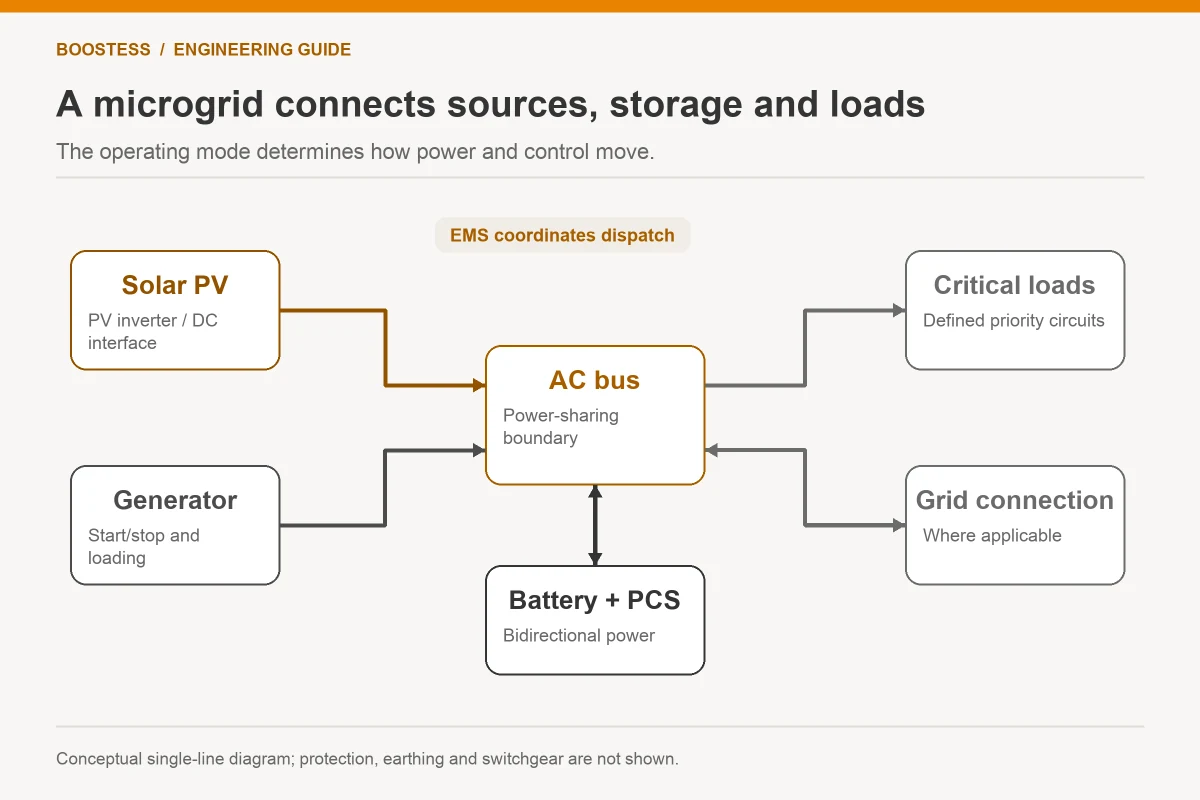
Ask what changes when the site is disconnected from the grid. Equipment that works when a strong grid supplies starting current may behave differently on an islanded bus. Identify the source that establishes voltage and frequency, the protection arrangements and the supported load types. The connection diagram is a concept until those functions are confirmed for the offered configuration.
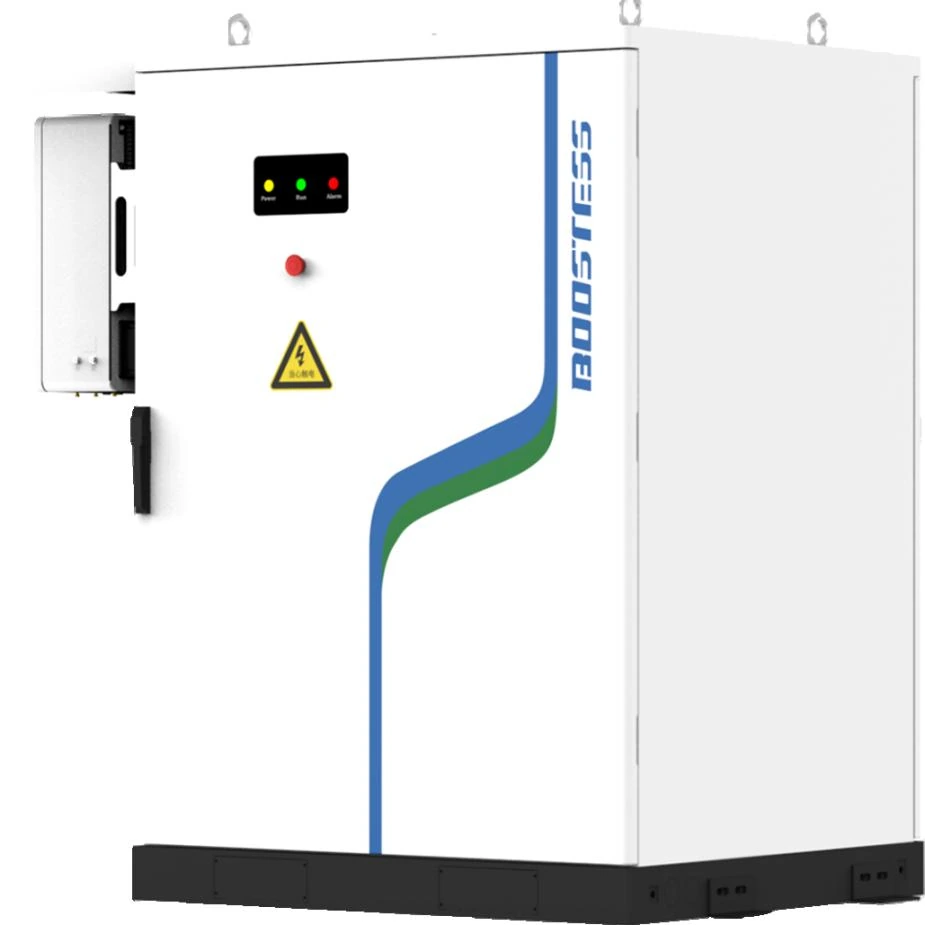
The BOOSTESS brochure documents a 50 kW / 100 kWh hybrid cabinet with LFP storage. It provides a useful rated configuration for evaluating smaller farm duties. In the hypothetical 120 kWh nighttime example, its 100 kWh nominal battery energy is already below the assumed AC energy requirement, before reserve or losses. An approved revised duty, different equipment selection or additional source would be needed.
Keep battery and integration choices separate
A larger battery bank can supply more energy, but it still requires suitable conversion equipment and controls. High-voltage battery racks represent a component architecture to investigate, rather than a complete pump solution with an assumed AC output. The project needs the approved rack configuration, compatible inverter, protection and environmental design.
Use the quotation to define deliverable energy at the pump’s AC bus. Specify the required beginning-of-duty state, reserve window, seasonal operating temperature and battery condition. Include auxiliary loads and the recharge path. A battery chosen for one isolated evening may not satisfy several difficult days in succession.
Field installation needs attention too. Dust, moisture, direct exposure, vehicle access and irrigation infrastructure can affect equipment location. Obtain approved drawings for foundations, enclosure clearances, cable routes and maintenance access. Cabinet ingress ratings do not resolve flooding risk or allow unrestricted placement beside wet process areas.
Review the off-season plan. Equipment may spend months with low activity while monitoring and auxiliaries continue to consume energy. The supplier’s approved storage and maintenance instructions should govern the standby state. Arrange the inspection and recommissioning process before the next irrigation season, with clear responsibility for checking alarms and communications.
Keep a preseason readiness date in the project programme. Before the first demanding pumping week, the operator should receive confirmation of the available reserve, approved pump sequence and current equipment condition. A modular rack architecture also needs confirmation that its associated conversion equipment and controls remain the accepted configuration. This review connects the component choice to the seasonal service the farm actually needs.
Test the operating season, then test the exceptions
A commissioning programme should cover the agreed pump combinations and starting methods under representative source conditions. Record AC power, battery energy, voltage, relevant alarms and control commands with a common time base. The irrigation specialist should verify that the operating sequence delivers the required process result.
Include low battery energy, a poor solar day and loss of a control measurement in the agreed scenarios. State which pumps receive priority and what the operator sees when the available supply cannot meet the requested duty. Avoid a control plan that quietly stops pumping without notifying the person responsible for irrigation.
Use a seasonal dispatch simulation alongside the physical tests. It should show how energy recovers between pumping days and identify the conditions that require a backup source or revised schedule. A single successful pump start proves an electrical event; it does not establish energy sufficiency for the season.
The IEA’s ASEAN electricity and renewables review supplies regional context for growing electricity and renewable-system needs. It does not replace the farm’s site assessment or establish local permissions. Keep geography-specific tariffs and connection conditions in a separate verified project record.
Questions for the owner and EPC
Is a two-hour battery enough for irrigation?
A nominal duration label cannot answer that question. Compare the actual pump power, operating hours, usable energy, recharge opportunity and accepted interruption risk. The same battery can fit one schedule and fail another.
Can the pump simply run whenever solar is available?
Only if the irrigation requirements and site operating permissions allow that schedule. Water delivery, crop needs and other constraints must be defined by the responsible specialists before the energy model changes operating times.
What evidence should accompany a pump-backup proposal?
Request a seasonal energy balance, motor-start assessment, supported-load list, control sequence, environmental design and agreed acceptance scenarios. Require assumptions to be explicit. That gives the farm an auditable connection between its water requirement and the proposed electrical system.