
Before Joining a VPP: Check BESS Availability, Metering and Reserve Conflicts
BESS VPP participation requirements begin with an honest statement of the capacity the site can make available. Installed battery power is only one limit. The connection agreement, site demand, backup reserve, battery condition, metering and permitted remote authority can all restrict a dispatch commitment.
A project owner should resolve those restrictions before joining a virtual power plant programme or allowing an aggregator to control equipment. Programme rules and commercial terms vary by territory and provider. This article supplies a readiness matrix and a hypothetical availability example; it does not claim eligibility for a particular programme or a guaranteed revenue stream.
Key Takeaways
- Commit available service at the agreed meter boundary, not unrestricted nameplate power.
- Define who can override dispatch and consume backup reserve.
- Obtain metering, cybersecurity and contract evidence before enabling remote commands.
On this page
- Define the service being purchased
- A readiness matrix exposes missing information
- Nameplate power can exceed the available commitment
- Backup reserve needs a recognised override right
- Metering must support both delivery and disputes
- Remote commands need defined access and expiry
- Review battery and commercial obligations together
- Buyer questions and acceptance
Define the service being purchased
Ask the programme operator to describe the requested service in measurable terms. It may concern load reduction, export, charging, a power response or another defined action. Identify the duration, notice, measurement boundary, baseline method, response tolerance and availability periods. These details determine what the battery and site must actually do.
Distinguish a site reducing imports from a site exporting electricity. The same battery discharge may produce either result depending on the simultaneous load. A controller cannot infer that an export permission exists because a programme requests it. Obtain the connection conditions and approved operating arrangement separately.
Clarify whether dispatch is mandatory during a declared window or optional event by event. The owner’s obligations, notification rights and treatment of unavailable equipment should be visible before enrolment. A broad statement that storage is “VPP ready” does not explain those obligations.
The IEA grid modernisation report describes the role of flexibility in power systems. That context supports evaluating dispatch services, but it does not establish local programme eligibility. Use the actual programme documents to define the project’s commercial and technical requirements.
A readiness matrix exposes missing information
Assign an evidence owner for each item. The battery supplier can document equipment capabilities, the EPC can establish site interfaces, the aggregator can specify programme requirements and the property owner can approve reserve and operating rights. No single party’s brochure covers the complete arrangement.
| Readiness area | Question to answer | Evidence to retain |
|---|---|---|
| Connection | Which import and export states are permitted? | Current connection agreement and approved operating modes |
| Power and energy | What service remains after site constraints and reserve? | Condition-specific availability calculation |
| Metering | How will delivery and baseline be measured? | Data schema, meter boundary and reconciliation method |
| Authority | Who can issue, reject or override commands? | Approved command hierarchy and access register |
| Availability | How are maintenance and low-energy states declared? | Notification process and event records |
| Commercial terms | What obligations, charges or penalties apply? | Programme contract and owner-approved assumptions |
| Battery terms | How does additional duty affect contracted limits? | Actual supplier warranty and operating documents |
This matrix is a scoping tool. It does not prescribe programme rules, standards thresholds or warranty terms. Each row should point to the actual evidence applicable to the chosen project.
Nameplate power can exceed the available commitment
The BOOSTESS brochure specifies a 125 kW / 261 kWh liquid-cooled cabinet and includes VPP among suggested applications. That manufacturer statement identifies an application to investigate. It is not evidence that the offered configuration has approval from any particular aggregator or utility.
For a hypothetical availability calculation, assume equipment can provide 80 kW under the event conditions after operational restrictions. Suppose the site’s permitted export is only 50 kW during the relevant state. The export commitment cannot exceed that connection boundary merely because the cabinet’s nameplate output is 125 kW.
The result differs if the service measures import reduction at a site carrying a simultaneous load. Define that boundary before assigning a commitment. The owner and programme operator should agree how changes in site demand affect delivery and how the baseline accounts for them. Do not use one static power value for several different services.
Now assume, only for illustration, a verified 180 kWh usable AC energy budget at the event starting condition. The owner reserves 60 kWh for another duty, leaving 120 kWh before any further event-specific allowance. A 50 kW one-hour export event would use 50 kWh. Two such events would use 100 kWh if there were no recharge; a third would exceed the remaining illustrative budget.
The example’s 180 kWh is an invented planning input, not a product performance claim. Its purpose is to show why repeat events and reserve rights matter even when one dispatch fits comfortably within the rated power.
Backup reserve needs a recognised override right
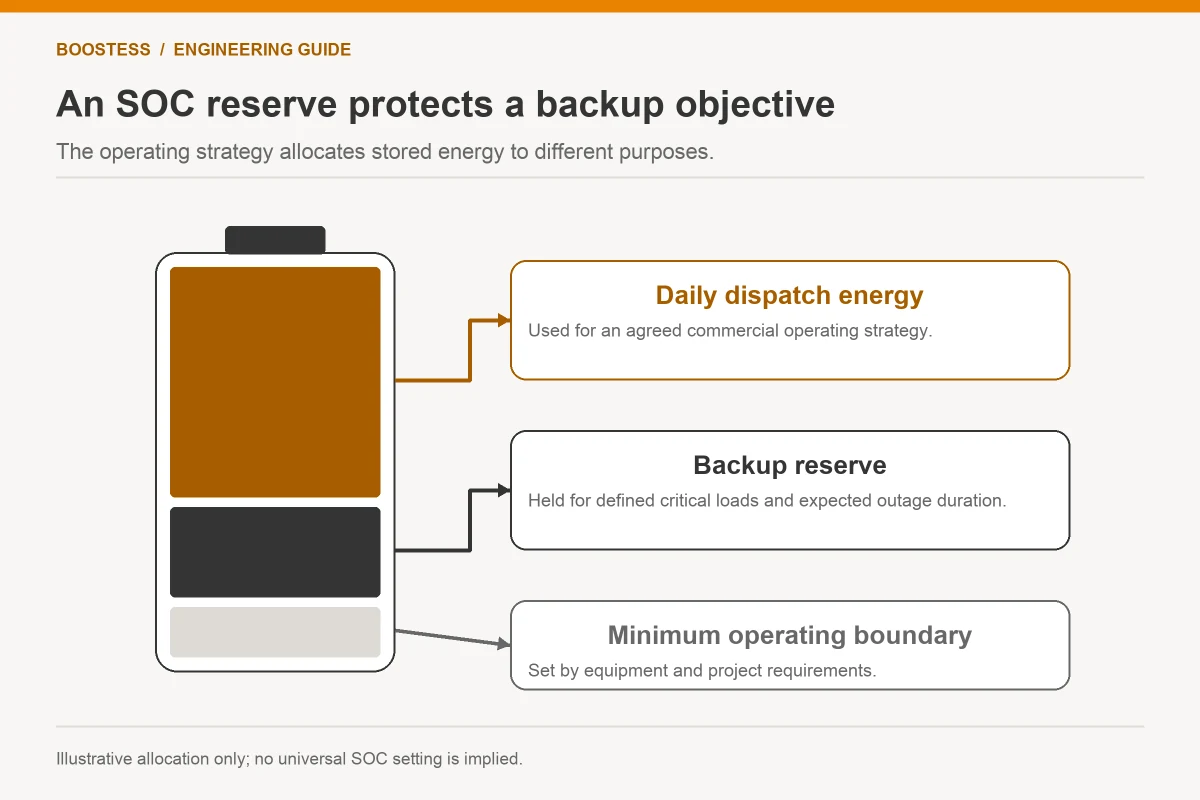
If the owner retains outage reserve, the programme’s commands must respect it or follow an explicitly authorised exception. Specify which events can reduce reserve, who approves that action and how the operating consequence is reported. A reserve setting hidden in the local EMS may conflict with an aggregator’s availability calculation.
The owner’s emergency or continuity requirements should take an identified place in the control hierarchy. That hierarchy also needs to include protective stops, temperature-related restrictions, connection limits and operator interventions. The programme should receive a meaningful availability state, rather than discovering restrictions after a missed request.
The BMS, EMS and PCS role discussion provides useful background for assigning these interfaces. The actual enrolment design needs to show where each limit is enforced and how the remote service learns that it has changed.
Review recharge after events. An aggregator may request another dispatch before the battery recovers its planned reserve. Define whether recharge is part of the service, subject to site limits or the owner’s responsibility. Without that rule, one party can count energy that another has already allocated.
Metering must support both delivery and disputes
Obtain the programme’s required data fields, resolution, timestamps and retention. Confirm the difference between an operational dashboard measurement and the metering accepted for settlement. A battery inverter’s energy counter may not represent delivery at the programme’s agreed boundary.
The DOE BESS evaluation method uses metered time-series data for assessment. A VPP project needs a related but programme-specific record of request, acknowledgement, actual response, availability and exceptions. Agree that record before control access is enabled.
Check baseline treatment with the programme operator. A changing factory shift, new PV or seasonal load can affect the comparison against which performance is measured. The owner should understand which data influence settlement and how corrections are handled. Avoid claiming programme value from a simple comparison of before-and-after monthly imports.
Require exportable records and a reconciliation path. If a payment or performance result is disputed, the owner needs more than a proprietary score in a portal. Retain the command and response timestamps, meter data, active restrictions and agreed baseline inputs needed to reproduce the result.
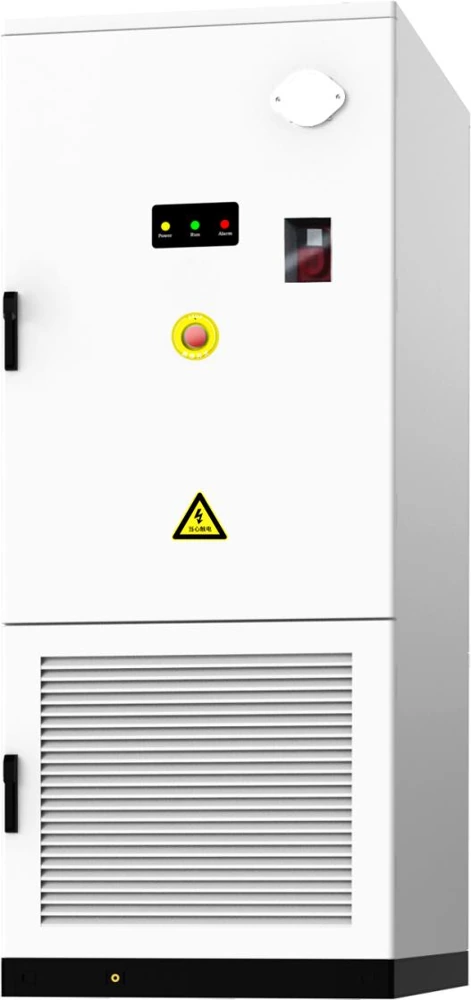
The cabinet’s documented CAN, Ethernet and RS485 interfaces, with CAN2.0 and Modbus TCP/RTU protocols, are useful starting points for an integration questionnaire. Ask which signals are readable, which commands are permitted and how the chosen gateway represents restrictions. Protocol presence does not establish that a programme accepts the device, that a writable interface exists for every requested function or that remote access satisfies the owner’s security requirements. Obtain the supported register or interface documentation for the offered configuration and verify the specific service during acceptance.
Remote commands need defined access and expiry
Enabling remote dispatch changes who can affect the site’s power flow. Confirm authorised accounts, roles, authentication arrangements, logging and access removal. The site should retain local protective control and the approved connection constraints irrespective of a remote economic request.
The DOE solar cybersecurity guidance discusses exposure associated with connected distributed-energy controls. For this project, turn that general concern into supplier questions and an approved access design. Do not infer a cybersecurity certification from an Ethernet interface or a cloud dashboard.
Specify command validity and expiry. A delayed request should not become an unexpected instruction after communications return. Define the fallback on loss of the aggregator link and the process for reconciling current state before remote operation resumes. The required behaviour must reflect the programme and site’s approved operating plan.
Exercise removal of access during acceptance. The owner should know how to suspend remote service for maintenance, an operating restriction or termination of the contract. Assign responsibility for updating both local settings and remote records. Commercial exit should not depend on informal contact with a former service operator.
Review battery and commercial obligations together
Obtain the actual warranty and permitted operating documents for the offered battery. Ask how additional throughput, cycling patterns and time at particular operating conditions relate to those terms. No warranty duration or throughput guarantee should be assumed from the supplied product brochure.
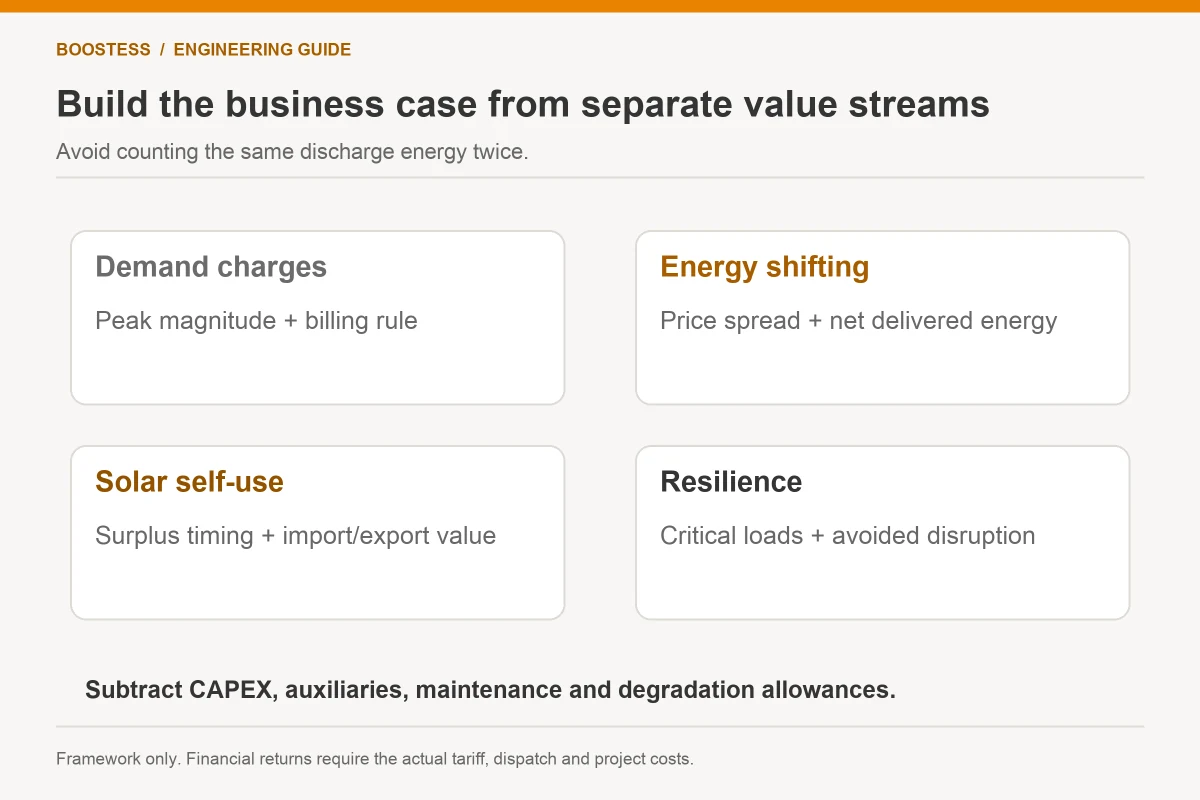
The site electricity-bill discussion provides a separate economic objective. Model daily site dispatch and VPP duty together, including reserve and recharge conflicts. Adding two independently calculated benefit streams can overstate what the same battery can deliver.
Include service fees, event obligations and unavailable periods in the owner’s comparison. Programme revenue may be conditional, while some costs remain fixed. The decision should show assumptions and sensitivities, not one guaranteed annual figure. Keep projected economic results separate from tested equipment performance.
Buyer questions and acceptance
Does a VPP application label establish enrolment eligibility?
No. Confirm the programme’s accepted equipment, data, control and connection requirements. The label identifies a possible application; model-specific integration and programme approval remain separate evidence.
What should an acceptance event demonstrate?
It should verify receipt, acknowledgement, permitted power response, reserve enforcement, metering and exception reporting at the agreed boundary. Include a lost-link condition and access suspension through approved test methods.
Can the owner retain daily control?
That depends on the contract and command hierarchy. Agree which decisions stay local, which the programme can request and how conflicting duties are resolved. The owner should approve that authority before remote operation begins.